How to survive low winter temperatures is a challenge that faces our resident birds and insects. Birds whose body mass would allow them to fit in a soup spoon, for example wrens (weight under 10 grams), blue tits (11 grams) and long-tailed tits (7 to 10 grams) need to be careful to conserve body heat. To achieve this, these small birds have developed behaviours that are specific to Winter.
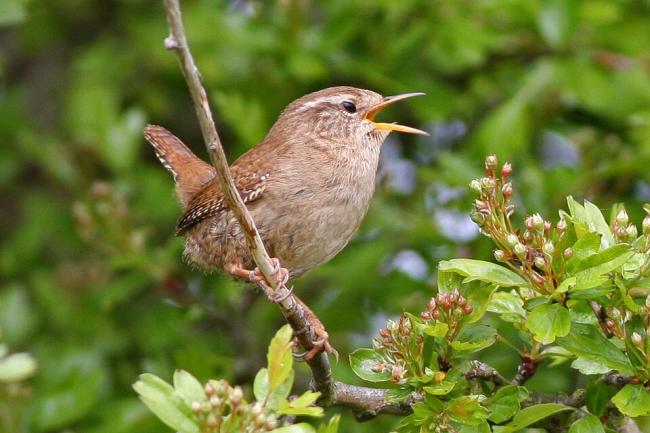
The wren is a solitary bird and the males will determinedly defend their territory with a powerful voice. In winter and low temperatures their song changes, and a general invitation is sung to invite others to ”snuggle” together in moss or leaf lined bundles, low down in bushes. Their behaviour adapts and they tolerate being crammed in together, keeping still. As soon as the temperature starts to rise with approaching spring, the song and behaviour revert to the rugged individualism of solitary roosting.
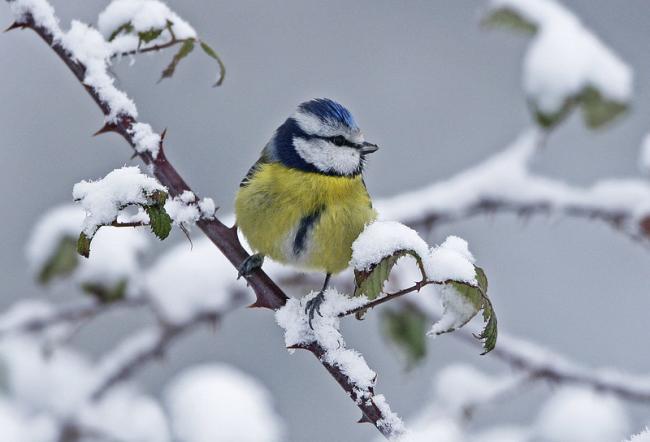
Blue Tits gather in flocks, mostly families throughout the year but in larger foraging groups in winter. In winter, they use nesting boxes for communal roosting. This is an adaptation in behaviour as nesting boxes in warmer temperatures would be strictly for a breeding pair, super important for Blue Tits as they only rear one clutch of eggs per year.
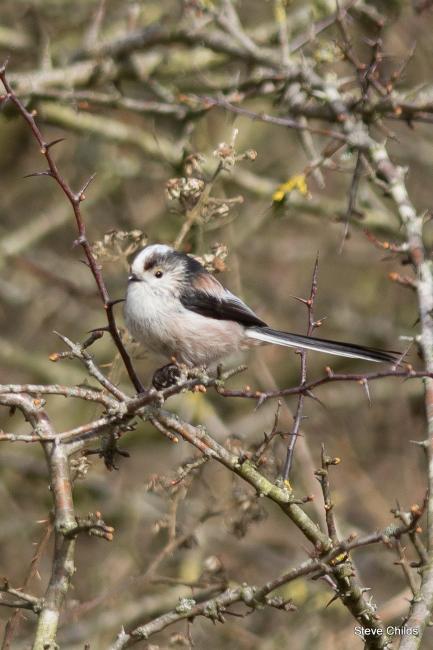
Long Tailed Tits gather in Winter flocks, feeding together during the day and roosting together at night. These little birds huddle together in a line on branches. A strict hierarchy is observed here with the senior dominant birds in the warmest middle of the line, in very low temperatures those at the ends may not survive the night. Come Spring, individuals form pairs and roost together. But if the temperature falls again, or it is unseasonably cold, the roosting lines can rapidly re-form and the chances of surviving the cold nights increases.
These 3 iconic species of small birds all use communal body heat to survive the night, but in species specific behaviours.
Of the 39 species of birds recorded, photographed and described on our website. https://www.heenecemetery.org.uk/heene-cemetery-species-index* some are migratory and don’t face winter here, the pied flycatcher for example. Larger resident birds, such as Herring Gulls have their own strategies for year round survival.
*With thanks to Rob Tomlinson https://www.heenecemetery.org.uk/blog/rob-tomlinson-environmental-advocate
Jane Tomlinson